
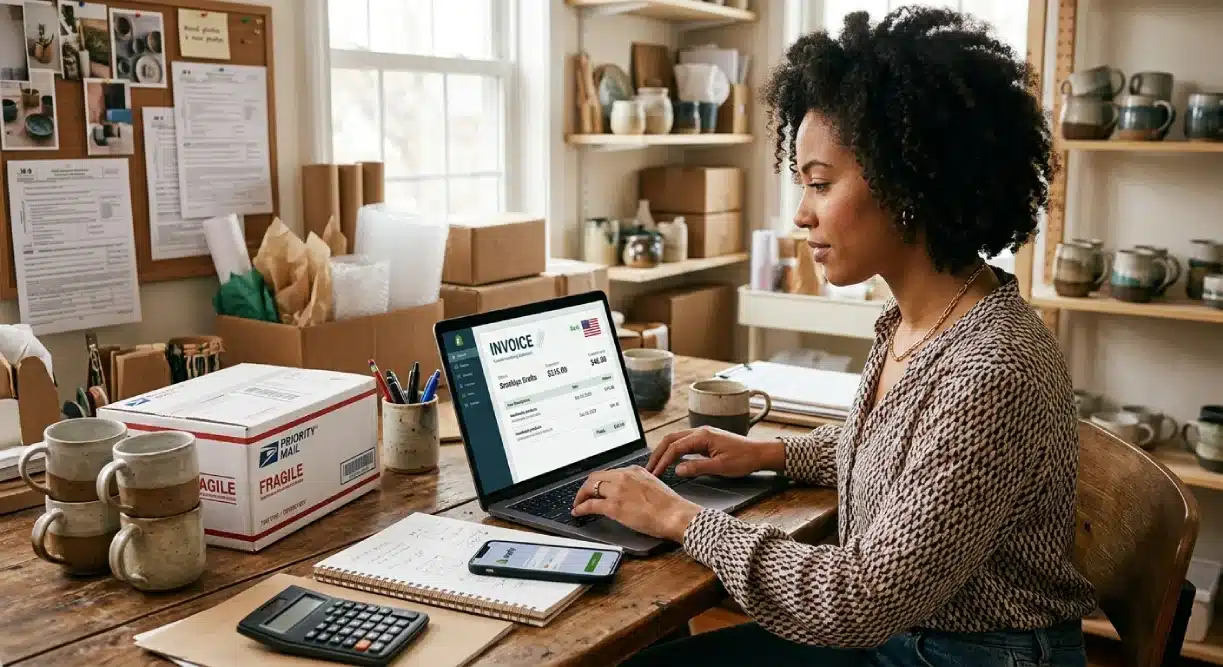
E-commerce invoicing appears simple until you start dealing with multiple orders, deliveries, returns, and sales tax across numerous states. Most small e-commerce vendors begin by using manual paper invoice copies and only recognize they are lacking the right format when disputes, chargebacks, or tax issues arise.
Having an appropriate system for invoicing makes every deal accurate, consistent, and legal. This guide breaks down practical invoicing tips for US-based e-commerce and product sellers so you can reduce errors, improve payment clarity, and stay tax-ready as you scale.
Invoicing Tips for an E-commerce Business
E-commerce invoices do more than request payment. They record every transaction, support tax reporting, and reduce disputes with customers. You increase efficiency and professionalism by standardizing what goes on every invoice and applying it consistently across all orders.
1. Include clear product descriptions
Always describe each product accurately, including quantity, variation (size, colour, model), and SKU where possible. Clear descriptions reduce confusion and lower the risk of disputes or returns.
2. Separate product cost, tax, and shipping
Make sure that you break down the invoice into line items for product price, sales tax, and shipping fees. This helps customers understand exactly what they are paying for and supports cleaner accounting.
3. Apply the correct sales tax based on nexus
Do not forget to charge sales tax only where your business has established nexus. This depends on your physical location, inventory storage, or sales volume in a state. An incorrect tax application can lead to penalties or customer complaints.
4. Match invoices with orders and payment confirmations
Align each invoice with the original order details and payment status. This helps you reconcile transactions and quickly resolve customer queries or disputes.
5. Include return and refund references
Reference return policies or include return order numbers when applicable. This improves transparency and helps customers understand how refunds are processed.
6. Add shipping details and tracking references
Always include the shipping method, carrier, and tracking numbers on the invoice. This reduces “item not received” disputes and improves customer trust.
7. Automate invoice generation where possible
Avoid manually creating invoices when order volume increases. Automation reduces errors, ensures consistency, and speeds up fulfillment workflows.
8. Store invoices centrally for tax reporting
Keep all invoices in one structured system so you can access records quickly during tax filing, audits, or financial reviews.
How Is an E-Commerce Invoice Different From a Service Invoice?
An e-commerce invoice deals with physical products, while a service invoice deals with labour, time, or expertise. This difference affects structure, required details, and tax treatment.
| Feature | E-Commerce Invoice | Service Invoice |
| Core focus | Physical products | Time-based or project-based work |
| Key details | Product name, SKU, quantity, shipping | Hours worked, project scope |
| Tax treatment | Sales tax may apply by state | Service tax depends on the jurisdiction |
| Additional documents | Packing slip, tracking info | Timesheets or project milestones |
| Refund handling | Returns and exchanges | Dispute or revision-based adjustments |
Sales Tax for Online Sellers: What You Actually Need to Know
US-based e-commerce vendors need to know sales tax laws, since those laws vary from one state to another. In other words, if you don’t have nexus somewhere, then you are generally not required to charge sales tax there.
Economic Nexus
States have economic nexus rules for sales or transaction volume; once you have reached that threshold, you are required to register and collect sales tax there.
Marketplace Facilitator Laws
Most times, platforms like Amazon, Etsy, or eBay often collect and remit sales tax on behalf of sellers. The platform will help reduce your administrative burden, but it should not stop you from taking the responsibility to understand where your tax obligations apply.
State-by-State Variation
Each state sets its own tax rates, exemptions, and filing rules. This means that your tax obligations can change depending on where your clients and customers live and where you store your products.
How Billing Helps E-Commerce Sellers Stay Organized and Tax-Ready
Running an e-commerce store means dealing with constant orders, payments, and multiple sales channels. Things get messy fast when invoices and records are scattered across different platforms.
Billing keeps everything in one place. Every order is automatically linked to its invoice, so you can track payments, refunds, and sales without switching between tools or doing manual checks. It also helps you stay tax-ready by organizing your sales data in a clear structure, making reporting easier even if you sell across multiple platforms or states.
If you want simpler order tracking, cleaner records, and easier tax preparation, create a Billing account and get started.
Frequently Asked Questions
1. What is a commercial invoice?
A commercial invoice is a document used in domestic or international trade that details the products sold, their quantity, value, and terms of sale. It serves as a legal record for customs, taxation, and payment purposes.
2. Do I need to charge sales tax on online sales to every state?
No. You only charge sales tax in states where your business has established nexus through physical presence or economic thresholds. Each state sets its own rules, so obligations vary across the US.
3. What is the best free invoicing software for e-commerce?
The best option depends on your business size, sales channels, and required features like automation and tax handling. Most sellers choose tools that integrate with their store platforms and support sales tax tracking.
4. What is the difference between an invoice and a packing slip?
An invoice requests payment and records the financial details of a sale, including price and taxes. A packing slip lists the physical items included in a shipment and is used for order fulfillment.
5. Do marketplaces like Etsy or Amazon handle sales tax for me?
Yes, in most cases marketplace facilitator laws require platforms like Etsy and Amazon to collect and remit sales tax on your behalf. However, you should still confirm your obligations in each state where you operate.
6. Can I send one invoice for multiple orders?
Yes, you can combine multiple orders into a single invoice if you clearly itemize each order for accuracy. This is common for bulk or repeat customers who request consolidated billing.
7. What should I include on a product invoice that I wouldn’t on a service invoice?
Product invoices should include SKU numbers, quantities, shipping costs, and delivery details, which service invoices do not require. These details help track inventory, fulfilment, and sales tax correctly.
Final Thoughts
E-commerce invoicing only works when you standardize your structure, apply tax rules correctly, and keep order records consistent. Clear invoices reduce disputes, improve trust, and make tax season far easier as your store grows.