
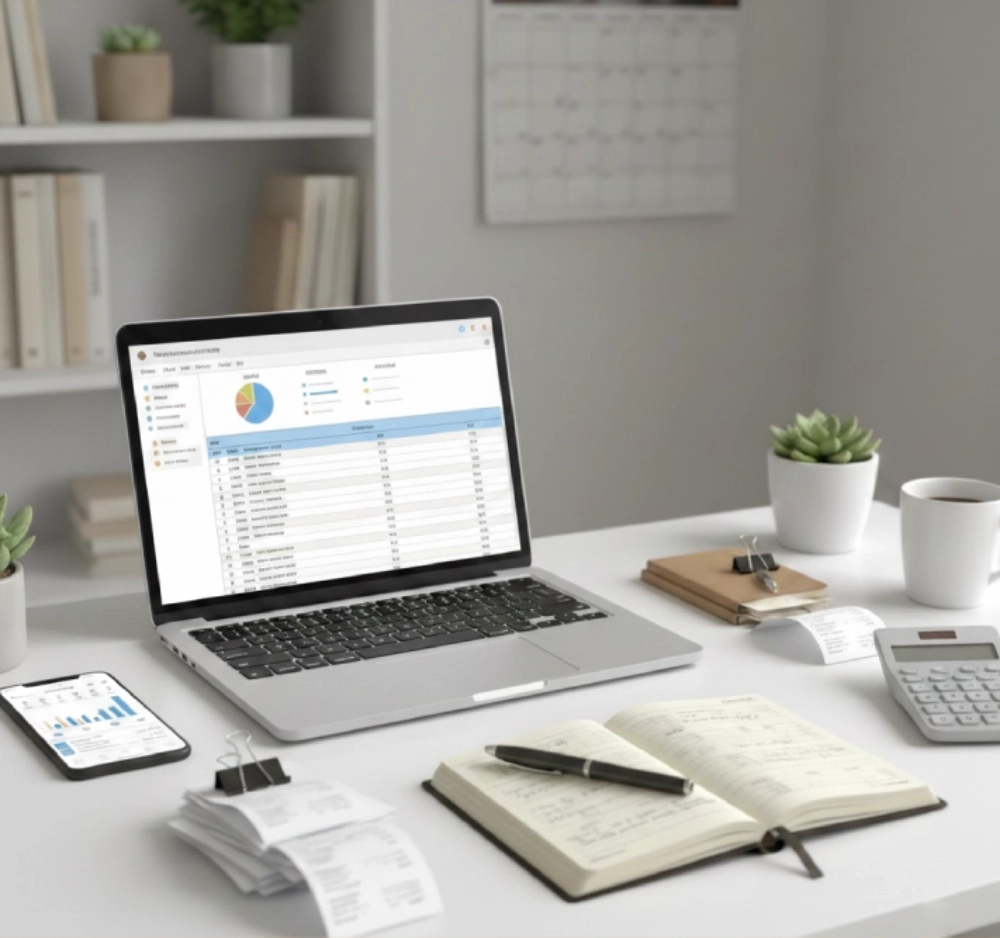
Freelancing gives you a lot of control over your finances. But unlike traditional employees, you are fully responsible for your finances. There are no payroll departments tracking payments or organizing deductions; every invoice, receipt, and expense is your responsibility.
These challenges make it hard for most freelancers to keep track of their income from different clients. They may also struggle to keep business and personal expenses separate. As tax season approaches, they may feel overwhelmed by small financial issues that have added up over time.
Fortunately, bookkeeping for freelancers does not have to be complicated. With a basic framework and the right invoicing and bookkeeping software for freelancers in Nigeria, you can keep your finances in order without any hassle.
To make things easier, we’ve created a free downloadable bookkeeping action plan you can use alongside this guide. It shows you exactly what to track so you can take action right away. Keep reading.
What is Bookkeeping?
Bookkeeping is the process of organizing, recording, and tracking all the money that moves in and out of your business.
For freelancers, this means:
- Recording of every client’s payments
- Tracking all business-related expenses
- Organizing receipts and invoices
- Monitoring of profit and cash flow
It is not complicated math; it is organized record-keeping.
If you create a logo for ₦250,000, that income needs to be recorded, as well as any income from the internet, software, or coworking space. Bookkeeping ensures that nothing slips through the cracks.
At its core, bookkeeping is an answer to three basic questions:
- “What did I earn?”
- “What did I spend?”
- “What have I really profited?”
Freelancers toil in the dark if they don’t keep books, but with bookkeeping, they gain clarity and control.
Why Bookkeeping Matters for Freelancers
Bookkeeping for freelancers is not just about being organized, as it has significant implications for your taxes, cash flow, business growth, and professional credibility.
Tax Compliance and Deductions
Good bookkeeping helps you make the most of your business deductions without running into tax troubles. By keeping receipts and income statements organized, you make tax season easy, reducing the likelihood of overpayment or underpayment of income tax.
Cash Flow Management
Freelancers do not always earn regularly, and bookkeeping helps you understand your income patterns, ensuring you do not spend money you do not actually have. With good bookkeeping, you are always aware of your actual income, avoiding financial shocks.
Business Growth Insights
Bookkeeping helps you make informed business decisions, as you are able to see what services are generating the most income and which clients are reliable in terms of payment. If you are finding that web design is more profitable than social media management, bookkeeping will help you identify that.
Professional Credibility
Good bookkeeping helps you look more credible to potential investors, loan officers, or corporate clients, as you are able to provide organized financial statements, implying that you are running your freelance business like an actual business, not just a side hustle.
What is the Difference Between Bookkeeping and Accounting
Bookkeeping and accounting are quite related, but they are not the same.
Bookkeeping is the day-to-day recording of financial transactions. The process involves tracking income, logging expenses, organizing receipts, and maintaining financial records.
Accounting makes use of the data collected from bookkeeping for analysis, interpretation, and reporting of financial performance. This includes financial statements, taxation, forecasting, and advice.
In simple terms:
- Bookkeeping keeps records of the numbers
- Accounting explains what those numbers mean
Freelancers must handle bookkeeping regularly, while accounting can be done periodically and often with the help of a professional during tax season.
Types of Freelance Income to Track
Freelancers may receive income from different sources, and hence, bookkeeping for freelancers involves tracking all income sources, not just income from clients.
Some of the income sources of freelancers include the following, which need to be tracked during bookkeeping for freelancers:
- Client Project Payments: Income from fixed price projects, milestones, or service fees.
- Hourly or Retainer Payments: Income from regular retainers or hourly rates.
- Platform Earnings: Income from freelance platforms like Upwork, Fiverr, minus service fees.
- Digital Product Sales: Income from e-books, courses, design assets, or other digital products sold.
- Affiliate or Referral Income: Income from promoting tools or services, minus referral fees.
- Licensing or Royalties: Income from licensing content like stock photos, music, or writing.
- Reimbursements: Income from clients, reimbursed for expenses incurred, but separated from profit.
Every income, regardless of its amount, should be tracked with the date, source, amount, and method of payment.
Creating an Income Tax System
A basic and consistent system is the foundation of bookkeeping for freelancers, and you have a variety of options to choose from, including a spreadsheet, bookkeeping software, or a hybrid approach.
Step 1: Open a Separate Business Account
You should not mix your personal and business finances. Keeping a separate bank account for your business ensures that tracking your income is accurate and easy to reconcile.
Step 2: Choose Your Tracking Method
You have three options to track your finances:
- Spreadsheet (Manual System): You can create columns to track your income, including Date, Client, Service, Invoice Number, Amount Invoiced, Amount Paid, Payment Method, and Status.
- Bookkeeping Software (Automated System): You can track all your invoices and payments and create reports with bookkeeping software.
- Hybrid System: You can use bookkeeping software to track invoices and a spreadsheet to track income or create a plan.
Step 3: Record Income Immediately
You should immediately log all your income, not at the end of the month.
Step 4: Reconcile Monthly
You should compare your income log with your bank statements to ensure that you have not missed anything.
While bookkeeping for freelancers is not complicated, it is essential to have a consistent approach, no matter how basic it is, to track your income effectively.
Handling Multiple Income Streams
Many freelancers receive income from different sources, services, and clients at the same time. This can be confusing if not managed properly.
This is how you can manage income:
1. Categorize Your Income
Categorize income sources, services, and clients in a way that makes sense to you, such as:
- Direct clients
- Retainers
- Freelance platforms
- Digital products
- Affiliate income
This will help you identify which income sources are more profitable.
2. Use Unique Invoice Numbers
Each client should have a unique invoice number. This will help you avoid duplication.
3. Track Platform Fees
Some platforms may charge fees for services provided. You should track:
- Gross amount earned
- Fee
- Net income received
This will give you a clear picture of income and expenses.
4. Categorize Your Income by Service Type
If you’re providing different services, such as writing and consulting, categorize each income source separately. This will give you a clear picture of which income source is more profitable.
Proper categorization will help you avoid confusion.
Dealing with Late or Partial Payments
Late and partial payments are a reality in freelancing. If not managed properly, they can create confusion in your income tracking.
Here’s how to manage them:
1. Tracking Invoice Payments
Use Unpaid, Partially Paid, or Paid to classify all invoices. Never assume an invoice has been paid until money has been credited to your account.
2. Distinguish Between Invoiced Income and Received Income
Use two columns to keep track of:
- Amount Invoiced
- Amount Received
This will ensure you don’t count money you haven’t received as earned profit.
3. Schedule Follow-Ups
Schedule reminders 3-5 days past due. Always maintain a professional tone.
A clear tracking of outstanding invoices protects cash flow and reduces financial stress.
Bookkeeping for Tax Season: What to Know
The only time tax season gets stressful is when records are incomplete. Therefore, if your bookkeeping as a freelancer is up to date, you will not have a hard time filing your taxes.
Here is what you should pay attention to:
1. Income and Expenses Must Be Separated Clearly
Your total income must match what you deposited into your bank account, and your expenses should be separated accordingly, i.e., software, internet, marketing, equipment, etc.
2. Tracking Deductible Expenses
The deductible expenses that a freelancer should keep an eye on include:
- Internet and phone charges
- Software subscriptions
- Office supplies
- Marketing and advertising
- Professional service fees
You should also check with the IRS, which offers a guide on how to deduct business expenses.
3. Maintaining Proof
Make sure that you have a receipt or a payment confirmation for every deduction you make.
4. Setting Aside Tax Money Regularly
A freelancer should set aside a certain amount of money for taxes at all times to avoid panic later on.
Consistent bookkeeping turns tax season from being a hassle into a routine administrative task.
How Freelancers Can Track Work Better with Billing
Billing simplifies bookkeeping for freelancers in an organized manner, avoiding unnecessary complexity.
1. Create and Send Professional Invoices
Billing allows you to create invoices with unique invoice numbers, client information, and due dates. You can send invoices directly to your clients, tracking all payments from the start.
2. Track Invoice Status at a Glance
You can mark invoices as Paid, Unpaid, Partially Paid, or Overdue using Billing. You can see all invoice statuses in one place, giving you a clear understanding of what is outstanding.
3. Record Expenses in No Time
You can upload all your business expenses, including images of receipts, with Billing. All your expenses are recorded in one place, making it easier to refer to them.
4. Track Your Income and Expenses
You can get a summary of all income, outstanding invoices, and expenses in one place with Billing. You can understand patterns in your income and expenses.
5. Everything in One Place
With Billing, all your income and expense information is recorded in one place, avoiding any hassle of misplaced receipts or information.
Billing is designed to track income, expenses, invoices, and their status, making it easier for freelancers to understand their bookkeeping without tax calculations or summaries.
If you’re ready to simplify your bookkeeping and stay on top of your cash flow, sign up for Billing today and start managing your finances with confidence.
Common Freelancer Bookkeeping Mistakes to Avoid
Even with simple bookkeeping systems, many freelancers are prone to certain mistakes. These mistakes should be avoided to ensure smooth bookkeeping.
- Mixing Personal and Business Finances: If you are using one account for both business and personal expenses, it can get really confusing. Therefore, it’s always best to keep them separate.
- Delaying Record-Keeping: If you delay keeping records until the end of the month or year, it can lead to mistakes.
- Ignoring Small Payments or Expenses: Every single amount counts. Therefore, it’s essential to keep a record of all small amounts.
- Failing to Categorize Expenses: If you are not keeping your expenses categorized, it can get really difficult to keep a check on where you are spending your money.
- Overcomplicating the System: If you are using an overly complicated system, it can get really confusing. Therefore, it’s always best to keep things simple.
- Not Reconciling Accounts: Reconciling accounts with bank statements should be done on a regular basis.
Your Bookkeeping Action Plan
Freelance bookkeeping doesn’t have to be complicated, though. What you need is something simple that you can follow consistently.
This is precisely the reason we have put together a simple Bookkeeping Action Plan, a step-by-step checklist you can use to manage your income, track your expenses, and keep your finances organized throughout the year.
Download it, use it, and bookkeeping will no longer be something you need to worry about.
[Download the Free Bookkeeping Action Plan]
Frequently Asked Questions
1. Do freelancers need bookkeeping?
Yes. Bookkeeping is important for freelancers to enable them to properly record their earnings, monitor their expenses, and determine their actual profit. Proper bookkeeping will also enable you to remain organized, avoid any confusion, and make tax filing less stressful. Even solo freelancers can benefit from having a simple system of record-keeping.
2. How long do freelancers need to keep bookkeeping records?
It is recommended that the majority of freelancers should maintain their bookkeeping records for at least 3-7 years, depending on their country’s tax laws. Keeping detailed records of income and expenses over a period of time will protect you in case of audits, which can be conducted at any time.
3. Why is bookkeeping important for freelancers?
Bookkeeping is important to freelancers since it helps them track income, manage expenses, and understand their cash flow. It helps freelancers make accurate tax reports, identify profitable clients or services, and avoid financial stress due to poor record-keeping habits. Proper bookkeeping helps freelancers make better business decisions, hence promoting business growth.
4. How should freelancers track expenses?
Freelancers need to track their expenses, which means that all business-related expenses need to be entered, categorized, and receipts saved, whether in paper form or digital format. Using a spreadsheet, accounting programs, or tools like Billing can help track expenses quickly, accurately, and easily.
5. How often should freelancers update their books?
Freelancers should update their books at least once a week, or whenever they receive money or make an expenditure. This helps avoid mistakes, shows the flow of cash, and makes tax preparation easier at the end of the year.
6. Can bookkeeping help freelancers earn more?
Yes. Bookkeeping will help freelancers identify which clients and services are profitable, ensure that they don’t miss any payments, and make better-informed decisions on pricing and running their business. It will also help you build credibility with your clients.
7. Is bookkeeping different from accounting?
Yes. Bookkeeping is the day-to-day recording of income, expenses, and financial transactions. Accounting uses that data to analyze finances, prepare reports, and guide business decisions. Bookkeeping provides the records; accounting interprets them.
Final Thoughts
Bookkeeping for freelancers doesn’t have to be complicated. You can manage income, expenses, and stay organized, which can reduce stress, avoid tax problems, and even help you make smart business decisions.
Having a simple system, whether it’s a spreadsheet, a bookkeeping tool, or anything else, will allow you to always know where your money is, stay audit-ready, and even help your freelance business thrive. So, start small, be consistent, and make bookkeeping a habit, not a task.